
Reverse Lordosis of the Cervical Spine: Symptoms, Causes, and How to Correct It

Share:
 In this article
 In this article
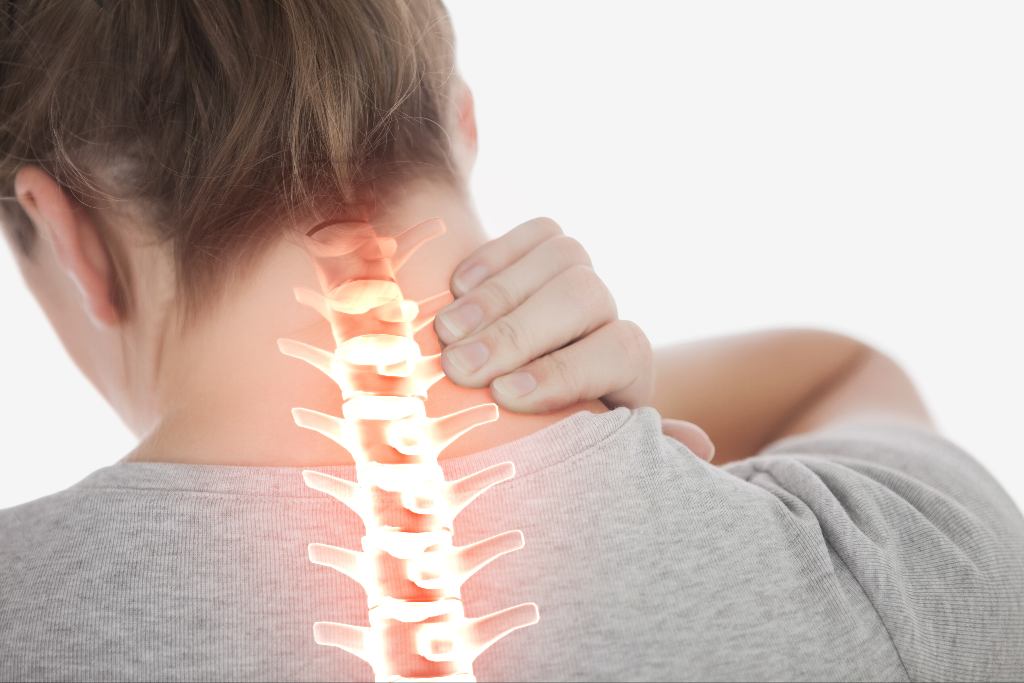
The neck is supposed to curve forward. Not by much, just a gentle arc that lets the seven vertebrae of the cervical spine stack into a natural shock absorber for the weight of the head. When that arc flattens out or starts to curve backward, the spine is doing something it wasn’t designed to do. The clinical name for it is reverse cervical lordosis, sometimes called cervical kyphosis or military neck, and most people who have it didn’t know until an X-ray showed up with the words written across the side panel.
If you’re reading this after one of those appointments, you probably want three things: a plain explanation of what’s actually happening in your neck, an honest answer to whether it can be reversed, and a clear sense of what to do next. The good news is that for most patients, the curve responds to conservative treatment if it’s caught before the changes become structural. The harder news is that reversing it takes consistent work over months, not days.
What is reverse cervical lordosis?
A healthy cervical spine has a forward-facing curve of roughly 20 to 40 degrees. The curve is called lordosis, the same word used for the forward curve at the base of the back. In the neck, the curve does three jobs: it absorbs shock from walking and running, it distributes the 10 to 12 pounds of head weight evenly across the vertebrae, and it gives the spinal cord and nerve roots the room they need to function.
Reverse lordosis means that curve has flattened toward zero degrees or, in more advanced cases, started to curve in the opposite direction. On an X-ray, a healthy neck looks like a soft backward C when viewed from the side. A reversed neck looks straight, or like a forward C, or like a sharp angle at one segment with the rest of the spine pulling against it.
The shift doesn’t usually happen overnight. It builds slowly, often over years, as the muscles and ligaments that hold the curve in place stop doing their job and the head drifts forward off the shoulders. Once the soft tissue adapts to the new position, the bones eventually follow.
Common symptoms of reverse cervical lordosis
Reverse lordosis itself doesn’t always hurt. Many people have a flattened curve for years before the symptoms show up. When they do, they tend to cluster around a few patterns:
- Persistent neck stiffness, especially after sleeping or after long periods at a screen
- Headaches that start at the base of the skull and wrap around the head or settle behind the eyes
- Shoulder and upper back pain as those muscles fight to hold the head up against gravity
- Tingling, numbness, or weakness in the arms or hands when the curve change starts to compress nerve roots
- Reduced range of motion in the neck, particularly when looking up or rotating side to side
- Dizziness or balance issues, since the upper cervical spine plays a role in proprioception and equilibrium
- Jaw pain or TMJ symptoms, because the muscles of the jaw and the upper neck share connections
- Fatigue, especially the kind that builds through the day and eases when lying down
Not every person with reverse lordosis has every symptom. Some have only one. The more advanced the curve change, and the longer it’s been in place, the more symptoms tend to stack.
What causes reverse cervical lordosis
The causes break into three categories: posture, trauma, and degeneration. Most cases involve a combination of the first two.
Posture is the largest contributor for adults under 50. The forward-head position required to look at a phone, a laptop, or a steering wheel for hours a day pulls the head out of alignment with the shoulders. Each inch of forward head position roughly doubles the effective weight the neck muscles have to support. Hold that load for a few hours every day for a few years and the curve starts to give.
Trauma, particularly whiplash from a car accident, can flatten or reverse the cervical curve in a single event. The forces involved in a rear-end collision stretch the ligaments and disrupt the muscle balance that holds the curve in place. Many patients first learn they have reverse lordosis on a post-accident X-ray.
Degeneration plays a larger role as patients age. Disc thinning, arthritic changes, and the natural shortening of soft tissue can all pull the curve flat. By the time degenerative changes are visible on imaging, the structural adaptation is often partially permanent, though the symptoms can still be significantly reduced with treatment.
A smaller number of cases stem from congenital differences, surgical history, or specific conditions like ankylosing spondylitis. Those cases need a different conversation with a specialist.
Can reverse cervical lordosis be reversed
Most cases of reverse lordosis can be improved meaningfully. Whether the curve fully returns to its normal arc depends on three things: how long it’s been in place, how much structural change has occurred, and how consistently the patient does the work.
If the curve change is recent, primarily postural, and not yet showing degenerative damage on imaging, a full or near-full restoration of the normal curve is realistic within six to twelve months of consistent treatment. If the change is older, involves disc or bone adaptation, or stems from trauma that wasn’t addressed at the time, treatment can still significantly reduce symptoms and restore much of the normal motion, even if the X-ray never looks textbook again.
The word “reverse” in this context is the goal, not always the literal outcome. Functional restoration matters more than a perfect X-ray.
How conservative treatment corrects reverse cervical lordosis
Restoring a cervical curve is a layered process. No single technique does it alone. The combination that works for most patients includes the following:
Chiropractic adjustment of the cervical spine
Specific, targeted adjustments to the vertebrae that have shifted out of their normal alignment. The adjustment doesn’t bend the bone back into a curve. It restores motion to segments that have locked up, which lets the surrounding muscles and ligaments start to rebalance. For patients who are nervous about traditional manual adjustment, instrument-assisted and low-force techniques produce similar results without the cracking sound.
Spinal decompression therapy
A non-surgical technique that uses controlled traction to gently stretch the cervical spine, relieving pressure on the discs and creating space for the curve to recover. Decompression is particularly useful when the reverse curve has compressed the discs or is producing nerve symptoms in the arms or hands.
Cervical traction
A more sustained form of pulling the spine into a corrective position, often done over 10 to 20 minutes per session using a specialized table or wedge. Traction works by lengthening the soft tissue that has shortened around the flattened curve, giving the spine the room to settle back into its natural arc.
Corrective exercises
The piece most patients underestimate. Specific strengthening of the deep cervical flexors (the small muscles at the front of the neck that hold the head over the shoulders) and stretching of the upper trapezius, scalenes, and pectoralis muscles, all of which tighten in response to forward head posture. These exercises are usually prescribed for daily practice at home and take 10 to 15 minutes.
Soft-tissue work
Dry needling, myofascial release, and Active Release Technique on the muscles that have tightened around the curve. Without releasing those muscles, the adjustment and traction have less to work with, because the muscles will keep pulling the spine back into the position they’ve adapted to.
Postural retraining
Ergonomic changes to the workstation, sleep position, and phone use. A perfect treatment plan in the clinic is undone if the patient spends nine hours a day in the position that caused the problem.
How long it takes to correct reverse cervical lordosis
Realistic timelines run in two phases. The first phase, usually four to eight weeks, focuses on reducing pain, restoring motion, and breaking the cycle of muscular adaptation. Most patients feel meaningfully better by the end of phase one. The second phase, three to six months, focuses on the slower work of restoring the curve and building the postural strength to maintain it.
After that, a smaller maintenance phase of once-a-month or every-other-month care keeps the gains in place. Without maintenance, the same posture habits that caused the curve in the first place will start to pull it flat again.
The patients who get the best results are the ones who do the home exercises. That’s the variable that separates the cases that resolve in a year from the cases that drag on for two.
When to see a chiropractor for reverse cervical lordosis
Reverse lordosis with mild stiffness and occasional headaches is one thing. The picture changes when nerve symptoms enter. Numbness, tingling, weakness, or shooting pain into the arms or hands suggests that the curve change is pressing on nerve roots or, less commonly, the spinal cord itself. Those symptoms warrant a prompt evaluation, sometimes including MRI imaging, and the treatment plan needs to be adjusted accordingly.
Severe dizziness, vision changes, difficulty swallowing, or loss of fine motor control in the hands are urgent and should be evaluated the same day, since they can indicate cord involvement that needs more than conservative care. Most cases never reach this point. The ones that do almost always had warning signs that went unaddressed for a long time.
Where to start
If an X-ray has flagged a reversed or flattened cervical curve, the next step is a proper evaluation: a posture assessment, a motion analysis, a neurological screen, and a conversation about which combination of treatments fits your specific curve, symptoms, and history. From there, the work begins. At Proactive Chiropractic and Rehab Center, Dr. Alec Khlebopros, DC has been treating cervical curve problems in Charlotte for over fifteen years, with a clinical stack built for exactly this kind of multi-layered case: gentle adjustments where appropriate, spinal decompression therapy for the disc piece, soft-tissue work for the muscular adaptation, and a home exercise plan you actually use.
The clinic’s name says the philosophy. Catch the curve change before it becomes a permanent fixture in your X-rays and your life. A reversed cervical curve responds to consistent, patient work, especially when you start before the structural piece sets in. If your neck pain and stiffness have been around long enough to send you looking up your X-ray report online, that’s the signal to start. You can request an appointment online or call (704) 504-1770, and we’ll get you in within a day or two, including evenings and Saturdays.
FAQ
Can I reverse cervical lordosis on my own with exercises?
Targeted exercises do most of the heavy lifting in a curve-restoration plan, but they work best alongside adjustments, traction, and soft-tissue work that prepare the spine to hold the new position. Exercise alone can produce some improvement, especially in younger patients with recent postural changes, but it’s slower and less reliable than a full conservative plan. The patients who improve fastest combine the two.
How long does it take to fix reverse cervical lordosis?
Most patients feel meaningfully better within four to eight weeks. Restoring the actual curve typically takes six to twelve months of consistent care, longer for older or trauma-related cases. After the active phase, a maintenance schedule keeps the curve from flattening again.
Is reverse cervical lordosis dangerous?
In most cases, the condition itself isn’t dangerous, but it causes ongoing symptoms and increases the risk of disc problems and arthritic changes over time if left untreated. Cases that produce nerve symptoms in the arms or hands need prompt evaluation. Severe symptoms involving dizziness, vision changes, or motor loss are urgent.
What’s the difference between cervical kyphosis and reverse lordosis?
The two terms are often used interchangeably. Technically, “reverse lordosis” describes any curve that’s flattened or moved away from its normal forward arc, while “cervical kyphosis” specifically refers to a curve that has gone past flat into a backward arc. In day-to-day clinical use, most providers treat them as the same condition with different degrees of severity.
Can a chiropractor really change the shape of my spine?
Yes, in most cases, though the changes are gradual and depend on consistent treatment plus daily exercise. The combination of adjustments, traction or decompression, and corrective exercise can restore much of a lost cervical curve, particularly in patients whose changes are still primarily postural. Older or more advanced cases see meaningful symptom relief even when the X-ray doesn’t fully return to textbook normal.