
Spinal Decompression Therapy Charlotte, NC

What is Spinal Decompression Therapy?
Spinal decompression therapy is a non-surgical treatment that uses a motorized traction table to gently stretch the spine and reduce pressure on the vertebrae and discs. The stretch creates negative pressure inside the disc, which encourages rehydration and draws bulging or herniated disc material back toward the center. That takes the load off the compressed nerve, eases the pain, and supports spinal alignment. A session takes about 20 to 30 minutes, and you drive yourself home afterward.
Dr. Khlebopros performs spinal decompression therapy by using specialized equipment that applies controlled traction forces to the areas of the spine that are experiencing pain. The table provides traction for decompression, while the computer-guided pulley system alternates between distraction and relaxation, which provides patients with a safe and effective treatment. This process helps restore proper alignment, improve mobility, and prevent further spinal complications.
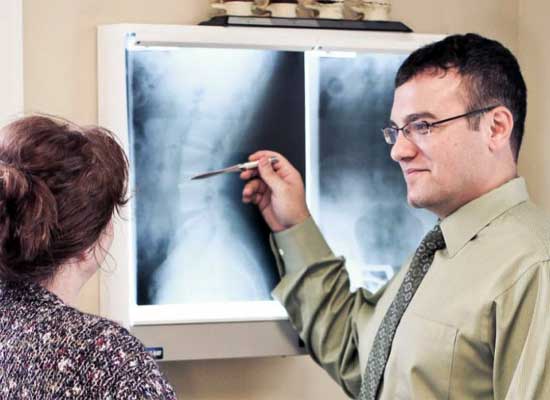
Non-Surgical vs Surgical Spinal Decompression
Two different procedures share the name, and patients mix them up constantly.
Surgical spinal decompression is an operation. A laminectomy, discectomy, or fusion removes bone or disc material to free the trapped nerve, and recovery runs from several weeks to several months.
Non-surgical spinal decompression is what we do at Proactive Chiropractic and Rehab Center. Nothing is cut and nothing is removed. You stay fully clothed, lie on the table in a padded harness, and the computer applies and releases traction while you rest. Surgery is the right answer for some patients, and we say so when the imaging points that way. For most disc and nerve compression, conservative care comes first.
Who Is a Good Candidate for Spinal Decompression Treatment?
Spinal decompression is a gentle option for many people living with chronic back and neck pain. You may be a good candidate if you have:
- Persistent discomfort from a herniated or bulging disc
- Degenerative changes in the spine
- Nerve compression causing radiating back pain or neck pain
- Pain that has lasted longer than four to six weeks
- Little or no improvement from standard physical therapy
- Ongoing pain after back surgery
Individuals struggling with post-surgical pain, poor posture contributing to spinal misalignment, or stiffness and restricted mobility may also benefit from this therapy. Patients who seek non-invasive back and neck pain relief and want to avoid risky back surgery may find significant improvement with spinal decompression therapy. Dr. Khlebopros and his team customize each spinal decompression treatment plan to ensure optimal results, supporting rehabilitation and long-term pain relief.
Why Choose Decompression?
Discover the advantages of this advanced, non-surgical treatment path.
Non-Surgical
Avoid the risks, recovery time, and complications that come with back surgery.
Pain Relief
Targets the disc and the nerve it is compressing, rather than masking the symptom.
Efficient Care
Sessions are quick, typically lasting 20 to 30 minutes, and fit easily into your schedule.
Natural Healing
Improves water, oxygen, and nutrient flow into damaged discs, which is how the disc repairs itself.
Recovery
Ongoing progress tracking, with the plan adjusted as your symptoms change.
Your Treatment Journey
A simple, comfortable process designed for your relaxation and recovery.
Consultation & Setup
Computer Setup
Decompression
Post-Care
Conditions Spinal Decompression Treatment Can Help With
Spinal decompression near you targets several spinal conditions, offering real relief for patients living with chronic pain. The most common conditions we treat include:
- Herniated and Bulging Discs. Decompression gently stretches the spine, allowing displaced disc material to draw back toward the center. That relieves the nerve pressure and the pain without surgery or recovery time.
- Sciatica. Sciatica is pain along the sciatic nerve, usually caused by a disc or bone crowding the nerve root in the lower back. Decompression relieves that crowding, which reduces the pain, tingling, and numbness running down the leg.
- Pinched Nerve. When a disc or a narrowed opening compresses a nerve root, decompression opens the space and gives the nerve room. Our pinched nerve treatment often pairs decompression with soft tissue work.
- Degenerative Disc Disease. Discs lose water content with age and flatten. By improving hydration and nutrient flow, decompression eases degenerative disc disease symptoms and improves mobility. It manages the condition rather than reversing it.
- Spinal Stenosis. Spinal stenosis is a narrowing of the spinal canal or the openings where nerves exit. Creating space between the vertebrae eases pressure on the cord and nerves, which makes walking and standing easier.
- Facet Joint Syndrome. The facet joints are the small paired joints at the back of each spinal segment. Decompression takes load off them, reducing the chronic aching and stiffness that come with irritation there.
- Scoliosis. Decompression does not straighten the curve. What it can do is ease the disc compression and nerve irritation that often come with a curved spine, which is frequently where the pain is actually coming from. We treat scoliosis for symptom relief, and we are clear about the difference.
- Post-Surgical Pain. For patients still hurting after back surgery, decompression can offer relief without another procedure, provided there is no hardware in the segment we would treat.
The treatment process involves the following steps:
- Initial Consultation – We run a thorough evaluation to determine whether spinal decompression is the right treatment for you.
- Customized Treatment Plan – Based on your condition and your imaging, we build a tailored chiropractic treatment plan.
- Therapy Session – You lie on the adjustable decompression table, which gently stretches the spine using computer-controlled traction forces.
- Post-Treatment Care – Rehabilitation exercises, chiropractic adjustments, and lifestyle guidance to support long-term relief and spinal health.
Many patients notice improvement after just a few sessions at Proactive Chiropractic and Rehab Center. The goal is to progressively correct the misalignment, restore nerve function, and get your mobility back.
How long the relief holds depends on what caused the compression in the first place. Decompression takes the pressure off the disc. It does not change the desk setup, the lifting habit, or the weak core that loaded the disc to begin with. Patients who complete the course and address the cause often stay comfortable for months or years, while going back to the same posture and the same load tends to bring the symptoms back. The plan therefore ends with rehabilitation exercises and ergonomic guidance rather than a final session, and some patients keep a maintenance visit on the calendar.
Advanced Treatment Techniques
Each technique is carefully selected and applied based on your condition and recovery goals.




Good Candidates
Ideally suited for these conditions
- Chronic pain from bulging or herniated discs
- Radiating pain (sciatica) into arms or legs
- Pain lasting longer than four weeks
- Failed response to standard physical therapy
Contraindications
Alternative treatments recommended
- Currently pregnant
- Severe osteoporosis or spinal instability
- Recent spinal fractures or tumors
- Metal implants/hardware in the spine
What Our Patients Are Saying
“After my car accident, Dr. Thompson got me in the same day. His treatment plan was thorough and I’m now pain-free. Highly recommend!”

“The team at ProActive handled all my insurance paperwork and helped me recover from my work injury. Professional and caring!”

“I’ve been to many chiropractors, but Dr.Thompson’s approach with spinal decompression changed my life. No more back pain!”


Insurance & Coverage
We verify your benefits and provide a clear cost breakdown. We are committed to affordable care.
 Same Day Appointments Available
Connect With Our Team
Complete the form below or call us directly to schedule your consultation
Your information is secure and confidential. We’ll contact you within 24 hours.
Private & Secure
100% Confidential
Fast Scheduling
Same-Day Available
Community Trust
20+ Years Serving
Proven Results
5-Star Rated Care
Spinal Decompression FAQs
Is spinal decompression painful?
No. Most patients describe it as a slow, gentle stretch, and a fair number fall asleep on the table. You stay fully clothed in a padded harness the whole time. If anything feels sharp, tell us and we adjust the settings on the spot.
Does spinal decompression actually work?
For the right patient, yes. An NIH-indexed randomized controlled trial found that patients with lumbar radiculopathy, meaning a disc pressing on a nerve root, improved more in pain, range of motion, and disability scores when non-surgical decompression was added to physical therapy than with physical therapy alone. The wider evidence base is still developing, which is why we do not quote a guaranteed success rate. Results depend on the condition and how long it has been going on. If you are several weeks into a plan and nothing is moving, we tell you and change course.
How many spinal decompression sessions will I need?
It depends on your condition and how you respond. Protocols commonly run 20 to 28 sessions over five to seven weeks. We set your number after the exam and imaging, not before, and we revise it as your symptoms change. Many patients feel a difference within the first few visits.
How long do the results from spinal decompression last?
Relief can hold for months or years once the disc has settled and the underlying cause has been addressed. Decompression takes the pressure off; it does not change the posture, the lifting habit, or the weak core that loaded the disc. Patients who complete the course and follow the rehabilitation and ergonomic guidance tend to keep their gains. Returning to the same load tends to bring the symptoms back, which is why some patients keep a maintenance visit on the calendar.
How much does spinal decompression cost?
Cost depends on how many sessions your condition needs and how much, if any, your plan covers. A full course costs more than a single visit, because a course is what the treatment actually requires. We verify your benefits and give you the full number in writing before you start, so nothing lands as a surprise halfway through. New patients can begin with our $39 new patient special.
Does insurance cover spinal decompression?
Frequently it does not. Many plans and Medicare classify non-surgical spinal decompression as investigational. The adjustments, therapeutic exercise, and electrotherapy delivered alongside it are often covered. We verify your benefits before you start and tell you exactly what you will owe.
Are there side effects from spinal decompression?
Mild soreness for the first week or two is the common one, comparable to the ache after starting a new workout. Serious complications are rare, and proper screening is what keeps them rare, which is why we require an exam and X-ray before we treat.
Who is not a candidate for spinal decompression?
We do not use decompression on patients who are pregnant or who have severe osteoporosis, spinal instability, a recent fracture, a spinal tumor, an active spinal infection, an abdominal aortic aneurysm, or metal hardware in the segment being treated.
How is spinal decompression different from an inversion table?
An inversion table uses your body weight and gravity to create a general stretch, with no control over how much force reaches which segment. A decompression table applies a measured, computer-controlled force to a specific level and cycles it on and off, which is what allows the pressure inside the disc to actually drop.
Start Spinal Decompression Treatment With Proactive Chiropractic
If a disc problem has been running your life for weeks or months, and the only options you have been offered are surgery or waiting it out, there is usually more room to work with. Decompression is gentle, it needs no downtime, and it is reasonable to try before anything permanent.
We find what is actually causing the compression, treat it without force, and tell you straight when your imaging points to surgery. Dr. Alec Khlebopros, DC has practiced in Charlotte for more than 20 years, and that honesty is why patients keep coming back.
Book an appointment online or call (704) 504-1770, and we will start with the exam, not the table.

