
What Is Active Release Technique (ART)? When Proactive Uses It and Why

Share:
 In this article
 In this article
Active Release Technique, often shortened to ART, is a hands-on soft-tissue method used to address tight, irritated, or restricted muscles, tendons, ligaments, fascia, and nerves. For many patients, ART is most helpful when pain feels less like a sharp joint problem and more like a stubborn soft-tissue issue: a shoulder that pinches when you reach, a hip that tightens after sitting, or a leg symptom that keeps coming back after activity.
At Proactive Chiropractic and Rehab Center in Charlotte, NC, ART may be used as part of a broader chiropractic and rehab plan when soft-tissue restrictions appear to be contributing to pain, stiffness, or limited movement. The goal is not to force the body through a painful treatment. The goal is to help irritated tissue move more freely, reduce unnecessary tension, and support better function during daily life, work, sport, or recovery.
Patients searching for “active release technique near me” are often looking for straightforward answers about whether ART may help their symptoms, what treatment involves, and how a provider determines when it is appropriate to include in a care plan.
What Is Active Release Technique?
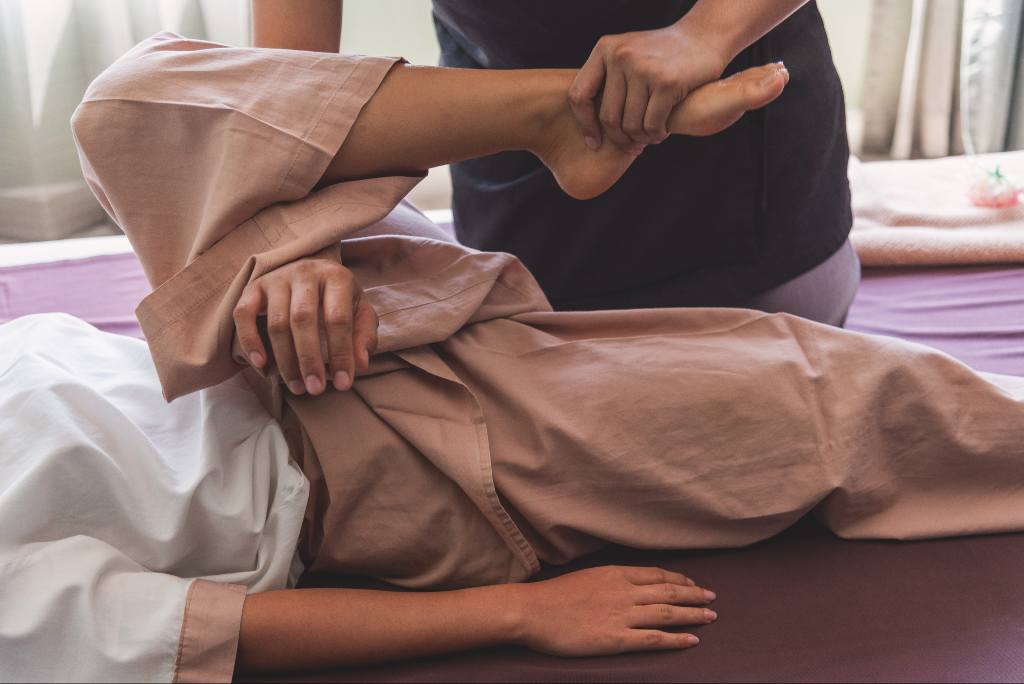
Active Release Technique is a manual therapy approach that combines targeted pressure with specific patient movement. During treatment, the provider identifies a tight or restricted area, applies controlled contact to the tissue, and guides the patient through a movement pattern that helps the tissue glide, lengthen, or release tension.
Soft tissue should be able to slide and move smoothly as the body bends, rotates, reaches, walks, lifts, or runs. After injury, overuse, repetitive posture, or long periods of irritation, tissue can become guarded, tender, or less mobile. ART is designed to address those restrictions directly so soft tissue can move and heal more effectively.
A simple way to picture ART is to think of the treatment as a focused conversation with the involved tissue. The provider is not randomly massaging a sore area. They are assessing how the muscle or connective tissue behaves during movement, then using a specific contact and motion to reduce restriction where it is affecting function.
ART may be used around several types of soft tissue, including:
- Muscles: Tight or overworked muscles that feel stiff, tender, or difficult to relax
- Tendons: Areas where muscle connects to bone and can become irritated with repeated strain
- Ligaments: Supportive tissue around joints that may become sensitive after injury
- Fascia: Connective tissue that surrounds and supports muscles and other structures
- Nerves: Irritated nerve-related patterns that may be affected by surrounding soft-tissue tension
ART is not the same as a chiropractic adjustment. An adjustment focuses on joint motion and alignment. ART focuses more directly on the soft tissue that supports, moves, and protects those joints. At Proactive Chiropractic and Rehab Center, those approaches can complement each other when a patient’s condition calls for both.
How Active Release Technique Feels During Treatment
ART is usually more active than a standard massage because the patient participates in the movement. The provider may ask you to bend, straighten, rotate, reach, flex, or extend a body part while they maintain pressure on the involved tissue.
The sensation can feel like firm pressure, stretching, or a deep pull through a tight area. Some patients describe it as “good discomfort,” while others feel mild tenderness during treatment and relief afterward. The pressure should stay controlled and communicative, not overwhelming.
At Proactive Chiropractic, patient comfort matters throughout care. If a movement feels too intense or a position does not feel right, the provider can modify the technique. ART should be specific and purposeful, not a test of pain tolerance.
Patients often notice one of several responses after treatment:
- Easier movement through a previously tight range
- Less pulling or pinching with certain motions
- Temporary soreness similar to post-exercise muscle soreness
- Improved awareness of which movement patterns trigger symptoms
Response varies based on the condition, how long symptoms have been present, and whether the soft-tissue restriction is part of a larger joint, nerve, or disc-related issue.
When Proactive Uses Active Release Technique
Proactive may use ART when the exam suggests soft tissue is limiting movement, increasing strain, or contributing to pain. The technique is especially relevant when a patient’s symptoms change with motion, pressure, posture, or activity.
ART may be considered when a patient has:
- Muscle tightness that keeps returning after rest
- Pain that worsens with repetitive movement
- Limited range of motion in the neck, shoulder, back, hip, or leg
- Tender bands of tissue that reproduce familiar symptoms
- Sports or work-related overuse patterns
- Soft-tissue irritation after a car accident or strain
- Stiffness that does not appear to be purely joint-related
The decision to use ART starts with evaluation, not assumption. Dr. Alec Khlebopros, DC and the Proactive team look at how the body is moving, where symptoms appear, and whether the involved tissue is safe and appropriate for manual soft-tissue work.
For example, a patient with shoulder tightness may not need the same care as a patient with pain that travels down the leg. A runner with hip and hamstring tightness may need a different plan than a desk worker with neck and upper back tension. ART is one tool within the care plan, not a one-size-fits-all answer.
Common Conditions ART May Help Address
ART is often used for musculoskeletal complaints where soft-tissue restriction plays a meaningful role. The technique may be part of treatment for symptoms in the shoulders, neck, back, hips, legs, arms, or feet.
Proactive lists ART as a treatment option for several common concerns, including:
- Back pain
- Carpal tunnel syndrome
- Shin splints
- Rotator cuff issues and persistent shoulder pain related to soft-tissue restriction
- Tennis elbow or golfer’s elbow patterns
- Knee problems
- Plantar fascia and foot tension
- Sports injuries and overuse problems
- Nerve-related symptoms, including some cases of sciatica, when surrounding soft tissue appears to be contributing to irritation
Repetitive strain and overuse are common reasons those symptoms develop. Desk posture, driving, lifting, typing, workouts, childcare, and sports can load the same muscles and connective tissue again and again. Over time, the body may compensate by tightening certain muscles, limiting range of motion, or shifting stress into nearby joints.
Whether ART is appropriate depends on the underlying cause of the symptoms. While soft-tissue restriction can play a role in many movement-related complaints, conditions such as shoulder pain and sciatica may also involve joint dysfunction, disc issues, nerve irritation, or other factors that require a broader treatment approach. That is why Proactive begins with an exam and personalized treatment plan before deciding whether ART should be part of care.
Why ART Is Often Paired With Chiropractic Care
Pain rarely comes from one isolated structure. A stiff joint can make nearby muscles work harder. Tight muscles can alter joint mechanics. Nerve irritation can cause protective guarding. Poor movement patterns can keep the same area irritated even after symptoms calm down.
ART fits well inside chiropractic care because it addresses the soft-tissue side of that pattern. While an adjustment may help restore joint motion, ART may help the surrounding tissue move with less restriction. Rehab exercises can then help the body hold onto better movement between visits.
At our clinic, care may include a combination of:
- Gentle chiropractic techniques
- Instrument-assisted or low-force options
- Active Release Technique
- Chiropractic traction
- Spinal decompression when appropriate
- Dry needling or gua sha when clinically relevant
- Electro muscle stimulation
- Corrective exercises and home-care guidance
The mix depends on the diagnosis, recovery goals, and the patient’s comfort level. A first-time chiropractic patient who is nervous about cracking, an athlete with a repetitive overuse injury, and a patient recovering from an auto accident may all need different paths toward relief.
What To Expect During An ART Visit At Proactive
Your first visit begins with a conversation about your symptoms, how the issue started, what makes it worse, and what you want to get back to doing comfortably. The exam may review your injury history, movement patterns, symptoms, and imaging such as X-ray or MRI when needed.
If ART is appropriate, the provider will explain what area is being treated and what motion you will perform. Treatment usually involves short, focused passes through the involved tissue rather than a long, general massage session. The provider may recheck motion or symptoms after treatment to see how your body responds.
A typical ART-focused portion of care may involve:
- Locating The Restricted Tissue: The provider identifies the area that feels tight, tender, guarded, or limited during movement.
- Applying Controlled Pressure: Specific contact is applied to the tissue while keeping communication open about comfort.
- Adding Patient Movement: You move through a guided range while the provider maintains contact.
- Rechecking Function: The provider reassesses motion, tenderness, or symptom behavior.
- Supporting The Change: Care may include adjustments, stretching, exercise, or home guidance based on your condition.
The visit should feel clear and collaborative. You should understand why a technique is being used and how it connects to your symptoms, recovery goals, and broader treatment plan.
Is Active Release Technique Worth Trying?
ART may be worth considering when pain feels connected to tight, irritated, or overworked soft tissue. Proactive describes ART as a way to help soft tissue problems heal properly, especially when the technique is combined with other procedures as part of a personalized treatment plan.
ART may be worth considering when pain feels connected to tight, irritated, or overworked soft tissue. The technique is especially relevant when symptoms show up during movement, improve temporarily with stretching, or keep returning after rest.
Patients searching for “active release technique near me” in Charlotte, NC often want a provider who can do more than apply pressure to a sore spot. A good evaluation should connect the soft-tissue finding to the larger movement pattern, then place ART inside a plan that fits the patient’s body and goals.
At Proactive Chiropractic, ART is used alongside gentle chiropractic treatment options and modern rehab-focused care. That combination can be helpful for patients who want a conservative, hands-on approach without feeling rushed into a one-technique plan.
To schedule an appointment or ask whether ART may fit your symptoms, contact Proactive Chiropractic and Rehab Center in Charlotte, NC.
FAQ About Active Release Technique
Is ART the same as massage?
ART is different from massage because it uses specific pressure with guided movement to address restricted soft tissue. Massage may focus more broadly on relaxation, circulation, or general muscle tension, while ART is usually more targeted and movement-based.
Does Active Release Technique hurt?
ART can feel tender or intense in tight areas, but treatment should remain tolerable. Proactive’s providers can adjust pressure, position, or movement if something feels too uncomfortable.
Can ART help shoulder pain?
ART may help when shoulder pain is connected to tight or restricted muscles, tendons, fascia, or surrounding soft tissue. A proper exam is important because shoulder pain can also involve joint irritation, neck referral, nerve symptoms, or injury patterns that need a broader care plan.
Can ART help sciatica?
ART may help some sciatica-related cases when tight or irritated soft tissue is contributing to pressure, guarding, or movement restriction around the low back, glutes, or legs. Sciatica can have several causes, so treatment should begin with an evaluation rather than assuming soft-tissue work is enough.
Do I need a referral for ART?
Most patients can contact Proactive directly to schedule chiropractic care and discuss whether ART may be appropriate. If your symptoms suggest a condition that needs medical imaging, specialist evaluation, or urgent care, the team can guide you toward the right next step.
Find Specialized Soft-Tissue Techniques At Proactive
Soft-tissue pain can be frustrating because the problem often shows up during the movements that matter most: reaching, sitting, walking, lifting, working, sleeping, or getting back to exercise. ART gives Proactive another way to address the tissue side of those movement problems while keeping care gentle, practical, and patient-specific.
Proactive Chiropractic and Rehab Center offers specialized soft-tissue techniques at Proactive for Charlotte-area patients who want a conservative, hands-on path toward better movement and less irritation. If tight tissue, repetitive strain, shoulder pain, sciatica, or a lingering injury has been slowing you down, the next step is a clear exam and a plan that fits what your body is actually showing.